

How to Teach a Toddler to Blow Bubbles Underwater: A Gentle, Playful Guide for Parents

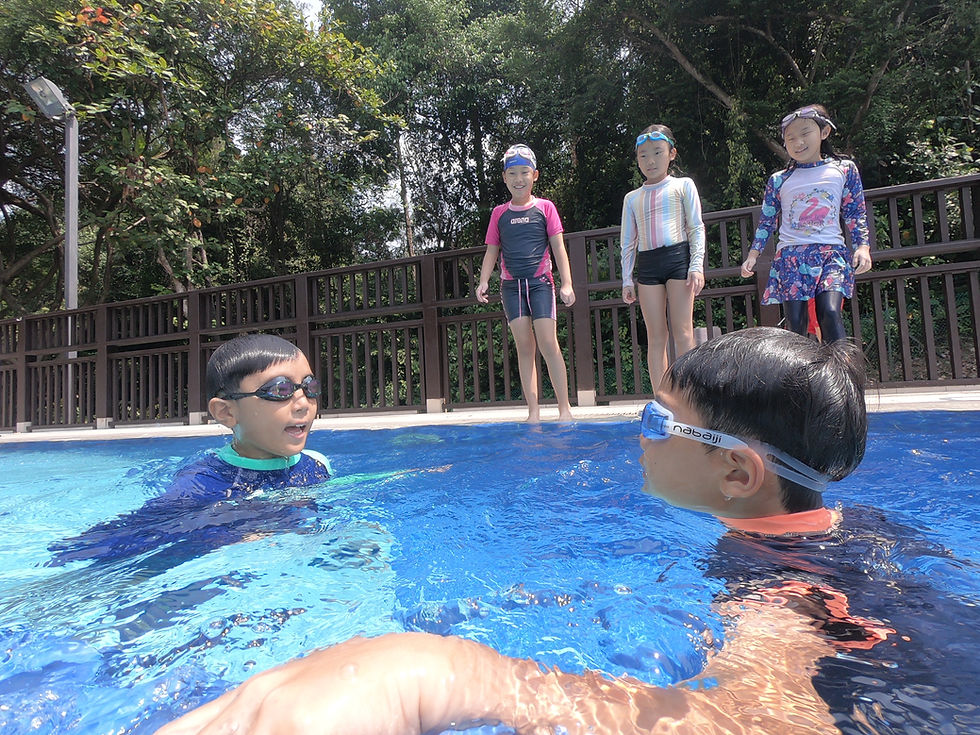
Blowing bubbles underwater is one of the most foundational—and joyful—skills in early swimming. For toddlers, it's often the first step toward breath control, water confidence, and future swimming success.
But let's be honest: asking a toddler to put their face in the water and exhale can feel like asking them to eat broccoli. There may be hesitation, tears, or outright refusal.
The good news? With patience, play, and the right approach, most toddlers can learn to blow bubbles—and have fun doing it.
This guide provides a gentle, step-by-step framework for teaching your toddler to blow bubbles underwater. You'll find age-appropriate expectations, playful progressions, safety essentials, and Singapore-specific tips to make the journey smooth, safe, and full of giggles.
🫧 Why Bubble-Blowing Matters (Beyond the Cuteness)
Blowing bubbles isn't just a cute party trick. It's a critical building block for lifelong water safety and swimming skill.
Key Benefits for Toddlers
Benefit | Explanation | Long-Term Impact |
Breath Control | Teaches exhaling underwater vs. inhaling—a foundational survival skill. | Prepares for rhythmic breathing in strokes like freestyle. |
Water Confidence | Reduces fear of submersion; builds trust in the water environment. | Creates positive associations that support future learning. |
Facial Desensitization | Helps toddlers tolerate water on face, in eyes, and around nose. | Reduces panic response in unexpected water exposure. |
Oral Motor Development | Strengthens muscles used for exhaling, swallowing, and speech. | Supports overall development beyond swimming. |
Parent-Child Bonding | Shared playful moments in water deepen trust and connection. | Builds a secure base for all future learning. |
💡 Key Insight: The goal isn't to produce a "bubble champion." It's to build positive, pressure-free experiences that lay the groundwork for water confidence.
👶 Age-Appropriate Expectations: What's Realistic?
Toddlers develop at vastly different rates. Use these guidelines—not rigid milestones—to gauge readiness.
Age Range | Typical Readiness Signs | Realistic Goal |
18–24 months | Tolerates water on face; enjoys splashing; follows simple cues. | Blow bubbles with mouth at water surface; tolerate brief chin submersion. |
24–30 months | Willing to submerge mouth; imitates adult actions; enjoys water play. | Blow bubbles with mouth fully submerged for 2–3 seconds. |
30–36 months | Understands "ready, 1-2-3"; enjoys games; shows curiosity about underwater. | Blow bubbles voluntarily; retrieve submerged toys with support. |
🚩 Red Flag: If your toddler shows intense fear, crying, or physical resistance to water on the face, pause and focus on gentle water play first. Never force submersion.
🎯 The Gentle Progression: From Dry Land to Underwater Bubbles
Teach bubble-blowing in small, playful steps. Never rush to the next step until your toddler is comfortable and happy at the current one.
Phase 1: Dry Land Practice (Build the Concept)
Goal: Teach the exhale motion without water pressure.
Activity | How to Do It | Success Indicator |
Bubble Wand Play | Blow bubbles with a wand; encourage toddler to mimic. | Toddler blows through mouth (not nose) to create bubbles. |
"Blow the Feather" Game | Place a feather or tissue on a table; blow it together. | Toddler understands exhale = movement. |
Straw Blowing | Use a straw to blow bubbles in a cup of water (on land). | Toddler connects blowing with bubble creation. |
Mirror Practice | Stand before a mirror; blow gently and watch the fog. | Toddler imitates the exhale motion. |
Key Cues:
✅ "Big breath in… blow out like a dragon!"
✅ "Make the feather fly!"
✅ "Watch the bubbles grow!"
💡 Pro Tip: Practice these games daily for 2–3 minutes. Consistency builds neural pathways faster than occasional long sessions.
Phase 2: Water's Edge Practice (Introduce the Sensation)
Goal: Connect exhale with water contact in a controlled, fun way.
Activity | How to Do It | Success Indicator |
Chin Dips | Hold toddler securely; gently lower chin to water surface; blow bubbles together. | Toddler tolerates chin in water; may blow a bubble or two. |
"Raindrop" Game | Say "Raindrop!" and gently pour a small cup of water over toddler's head (avoiding face). | Toddler anticipates and enjoys the sensation. |
Splash & Blow | Splash water gently toward toddler's mouth; encourage blowing back. | Toddler blows in response to water contact. |
Toy Boat Bubbles | Float a toy boat; blow bubbles near it to "make it move." | Toddler engages with the cause-effect play. |
Key Cues:
✅ "Ready? Chin down… blow!"
✅ "Raindrop! Blow the water away!"
✅ "Let's make the boat go!"
⚠️ Safety: Always support your toddler's head and neck. Keep sessions short (3–5 minutes) and end on a positive note.
Phase 3: Shallow Water Practice (Voluntary Submersion)
Goal: Toddler blows bubbles with mouth fully submerged, voluntarily.
Activity | How to Do It | Success Indicator |
"Fishy Bubbles" | Hold toddler facing you; say "Let's be fishies!" and blow bubbles together underwater. | Toddler imitates blowing bubbles with mouth submerged. |
Treasure Hunt | Place a sinking toy just below surface; encourage toddler to blow bubbles while reaching. | Toddler submerges mouth voluntarily to retrieve toy. |
"Pop the Bubbles" Game | Blow bubbles underwater; toddler "pops" them with a finger or hand. | Toddler engages with underwater bubbles playfully. |
Countdown Blows | "Ready? 1… 2… 3… BLOW!" together underwater. | Toddler anticipates and participates in the countdown. |
Key Cues:
✅ "Fishy bubbles! Blow, blow, blow!"
✅ "Find the treasure—blow while you reach!"
✅ "1… 2… 3… POP!"
💡 Pro Tip: Use a clear verbal cue ("Ready, 1-2-3, blow!") every time. Predictability reduces anxiety and builds trust.
Phase 4: Independent Practice (Confidence Building)
Goal: Toddler blows bubbles underwater without prompting, as part of play.
Activity | How to Do It | Success Indicator |
Bubble Races | "Who can blow the most bubbles?" Make it silly and fun. | Toddler initiates bubble-blowing during play. |
Underwater Singing | Hum or sing a simple tune underwater; encourage toddler to join. | Toddler experiments with sound and bubbles underwater. |
"Bubble Beard" Game | Blow bubbles under chin to make a "beard"; let toddler try. | Toddler enjoys the sensory feedback of bubbles on skin. |
Free Play Integration | During regular pool time, casually blow bubbles; observe if toddler imitates. | Toddler incorporates bubble-blowing into independent water play. |
Key Cues:
✅ "Your turn! Show me your bubbles!"
✅ "Let's sing underwater—blow the song out!"
✅ "Look at your bubble beard!"
🎯 Celebration Tip: Praise effort, not perfection. "You blew bubbles! That was so brave!" reinforces courage over outcome.
🎮 Fun Games to Make Bubble-Blowing Irresistible
Keep learning playful. Toddlers learn through joy, not instruction.
1. Bubble Wand Transfer
How: Blow bubbles with a wand above water; encourage toddler to "catch" them by blowing underwater.
Focus: Connects familiar bubble play with underwater exhale.
Tip: Use colorful, non-toxic bubble solution for extra engagement.
2. Treasure Chest Dive
How: Place small, safe toys in a shallow "treasure chest" (plastic container) on the pool floor. Encourage toddler to blow bubbles while reaching in.
Focus: Motivates voluntary submersion with a fun reward.
Tip: Start with toys partially submerged; gradually lower as confidence grows.
3. Animal Bubble Friends
How: "Let's blow bubbles like a fish!" or "Can you blow like a dragon?" Add sound effects and movements.
Focus: Makes bubble-blowing imaginative and silly.
Tip: Use stuffed animals as "bubble buddies" for extra play value.
4. Bubble Painting
How: Add a drop of food coloring to a cup of water; blow bubbles to "paint" the water.
Focus: Adds visual interest to bubble-blowing; enhances cause-effect understanding.
Tip: Use washable, non-toxic food coloring; rinse toddler's face after.
5. Mirror, Mirror Underwater
How: Submerge your face alongside your toddler's; make funny faces and blow bubbles together.
Focus: Normalizes having eyes open underwater; builds trust through shared experience.
Tip: Use child-safe goggles if chlorine irritates eyes.
💡 Singapore Tip: Many ActiveSG Parent & Child classes incorporate these games in a supervised, warm-water environment. Ask instructors about bubble-focused activities.
🛡️ Safety First: Non-Negotiable Guidelines
Safety isn't optional—it's the foundation of every positive water experience.
Essential Safety Rules
✅ Constant Touch Supervision: An adult must be within arm's reach at all times.
✅ Shallow Water Only: Start in water no deeper than the toddler's chest (typically <0.9m).
✅ Warm Water Temperature: Ideal for toddlers: 30–32°C to prevent chilling and muscle tension.
✅ No Breath-Holding Competitions: Never encourage or reward prolonged submersion.
✅ Clear Exit Strategy: Ensure your toddler knows how and where to stand up or exit.
Equipment & Environment Checks
Item | Why It Matters |
Non-slip pool deck | Prevents slips during entry/exit. |
Clear water visibility | Allows you to see your toddler underwater at all times. |
Appropriate swimwear | Snug-fitting suits reduce drag and distraction. |
Goggles (optional) | Can reduce eye irritation; ensure they fit well and don't leak. |
First aid kit nearby | For minor scrapes or unexpected incidents. |
Adult Preparedness
CPR Certification: At least one supervising adult should have current infant/child CPR training (offered by Singapore Red Cross or St. John Ambulance).
Water Rescue Basics: Know how to safely lift and support a toddler underwater.
Calm Demeanour: Your anxiety transfers to your child. Stay relaxed and positive.
⚠️ Critical Reminder: Toddlers cannot reliably self-rescue. Supervision is not optional—it is essential.
🚫 Common Challenges and Gentle Solutions
Challenge | Why It Happens | Gentle Solution |
Fear of water on face | Natural protective reflex; may be heightened by past experience. | Start with dry land games; progress slowly; never force. |
Holding breath instead of exhaling | Instinct to protect airway; doesn't understand exhale underwater. | Practice exhale on land first; use playful cues ("blow the feather"). |
Crying or resisting | Overwhelm, discomfort, or mismatched expectations. | Pause; return to a previous successful step; end on a positive note. |
Inconsistent progress | Toddlers have good days and bad days; development isn't linear. | Celebrate small wins; focus on enjoyment over achievement. |
Imitating incorrectly | Blowing through nose, or inhaling underwater. | Model clearly; use mirrors; keep sessions short and fun. |
💡 Key Principle: If your toddler shows distress, stop immediately. Return to a step where they felt successful. Progress is measured in weeks and months, not days.
🗣️ Language That Builds Confidence
How you talk about bubble-blowing shapes your toddler's relationship with water.
Use Encouraging, Specific Praise
❌ "Good job!" (vague)
✅ "You blew such big bubbles!" (specific)
✅ "I saw how bravely you put your mouth in the water!" (effort-focused)
✅ "You held my hand so well while we blew bubbles!" (process-oriented)
Frame Challenges Positively
❌ "Don't be scared of the water."
✅ "The water feels new, doesn't it? We'll go slowly together."
❌ "Why won't you blow bubbles?"
✅ "Would you like to try blowing bubbles with me?"
Empower with Choice
"Do you want to blow bubbles like a fish or a dragon?"
"Should we count to 3 or 5 before we blow?"
"Which toy should we find first?"
🎯 Key Principle: Toddlers thrive on predictability and autonomy. Offer controlled choices to build confidence.
🇸🇬 Singapore-Specific Tips for Bubble-Blowing Success
Where to Practice Safely
Provider | Programme | Notes |
ActiveSG Parent & Child | Water familiarisation for 18m–3y | Subsidised; warm pools; certified instructors. |
Disability Sports Association (DSA) | Inclusive water programmes | For children with special needs; tailored support. |
Private Infant Swim Academies | Specialised toddler submersion classes | Verify instructor credentials and safety protocols. |
Condo Pool Classes | Convenient, small-group instruction | Confirm instructor has infant/toddler training. |
Climate & Facility Tips
Water Temperature: Singapore pools are typically 26–28°C. For toddlers, seek heated pools (30–32°C) or limit sessions to 15–20 minutes to prevent chilling.
Outdoor Pools: Sun exposure can be intense. Use UV-protective swimwear, rash guards, and water-resistant sunscreen.
Peak Hours: Avoid crowded times (evenings, weekends) for toddler lessons—less distraction, more attention.
PDPA Awareness: Be mindful of other families' privacy when filming or photographing lessons.
Equipment Access in Singapore
Item | Purpose | Where to Buy |
Child-Safe Goggles | Reduce eye irritation from chlorine | Decathlon, SwimTayka, Pro Swim Shop |
Snug Swimwear | Comfortable movement; reduces drag | Decathlon, H&M Kids, Shopee |
Microfiber Towel | Dries faster; reduces evaporative cooling | Decathlon, Popular, Kinokuniya |
Hooded Towel/Robe | Keeps toddler warm post-swim | Shopee, Lazada, baby stores |
Bubble Wands & Toys | Makes bubble practice playful and fun | Daiso, Toys"R"Us, Shopee |
💡 Budget Tip: Start with essentials (snug swimwear, microfiber towel). Add goggles or specialty toys as your toddler shows interest.
🩺 When to Seek Professional Guidance
While parent-led bubble practice is valuable, professional instruction is recommended when:
✅ Your toddler shows persistent fear or anxiety around water.
✅ You want to progress to more advanced skills (e.g., independent floating).
✅ Your child has special needs requiring tailored instruction.
✅ You lack confidence in your own water safety knowledge.
✅ You're preparing for formal swim lessons or SwimSafer foundational skills.
Choosing a Qualified Toddler Swim Instructor in Singapore
Question to Ask | Why It Matters |
"What training do you have in infant/toddler aquatic instruction?" | Ensures age-appropriate methodology. |
"What is your student-to-teacher ratio for toddler classes?" | Toddlers need high supervision (ideally 1:2 or 1:3). |
"How do you handle a toddler who becomes distressed?" | Reveals trauma-informed approach. |
"Is the pool heated for toddler classes?" | Cold water increases tension and discomfort. |
"Can I observe a class before enrolling?" | Allows you to assess teaching style and safety culture. |
🔍 Verification: Check if instructors hold certifications from recognised bodies (e.g., SwimSafer Instructor, Austswim, or equivalent infant aquatics training).
📅 Sample 10-Minute Bubble Practice Session
Age: 24–30 months | Setting: Shallow, warm pool | Supervision: Constant touch
Time | Activity | Focus |
0–2 min | Dry Land Warm-Up | Blow bubbles with wand; practice exhale motion. |
2–4 min | Water's Edge Play | Chin dips; "Raindrop" game; splash & blow. |
4–7 min | Shallow Water Bubbles | "Fishy bubbles"; treasure hunt; countdown blows. |
7–9 min | Free Play Integration | Let toddler explore bubbles independently; follow their lead. |
9–10 min | Positive Closure | Praise effort; dry off warmly; celebrate with a high-five. |
💡 Flexibility is Key: If your toddler loses interest or shows distress, shorten or skip activities. The goal is positive exposure, not completing a checklist.
🏁 Conclusion: One Bubble at a Time
Teaching a toddler to blow bubbles underwater isn't about creating a miniature swimmer. It's about nurturing a positive, safe, and joyful relationship with water that will serve them for life.
By following your toddler's cues, prioritising safety, progressing gradually, and keeping the experience playful, you lay the foundation for lifelong swimming skills—and perhaps, one day, SwimSafer success.
Remember:
Safety is non-negotiable: Constant supervision, shallow water, warm temperatures.
Follow your toddler's pace: Readiness varies; never force or compare.
Celebrate small wins: A single bubble blown is progress.
Seek support when needed: Professional instruction complements parent-led play.
In Singapore, where water is part of our landscape and our culture, giving your toddler a confident start in the water is a gift that lasts a lifetime.
So take a breath, hold their hand, and blow some bubbles—together.
✅ Quick-Reference Checklist: Teaching Bubble-Blowing to Toddlers
Start on dry land: Practice exhale motion with bubbles, feathers, or straws.
Progress gradually: Chin dips → mouth submersion → voluntary bubbles.
Use playful cues: "Fishy bubbles," "1-2-3 blow," "Raindrop!"
Keep sessions short: 5–10 minutes maximum; end on a positive note.
Prioritise safety: Constant touch supervision; shallow, warm water only.
Celebrate effort: Praise courage and participation, not perfection.
Watch for distress: Stop immediately if your toddler shows fear or discomfort.
Seek professional help if progress stalls or anxiety persists.


Comments