

Overcoming Fear of Water: Adult Swim Training Tips

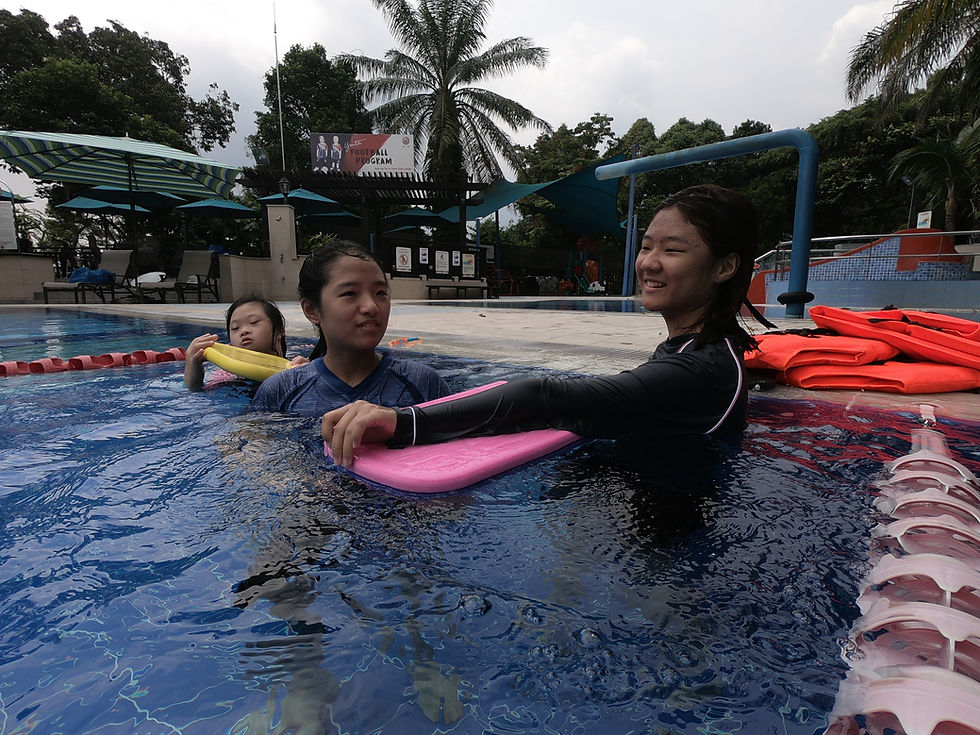
Fear of water—known as aquaphobia when severe—is more common among adults than many realize. Maybe you had a frightening experience as a child. Maybe you never learned to swim and now feel embarrassed to start. Or maybe the very idea of submerging your face triggers panic.
Whatever the reason, your fear is valid. And more importantly: it is surmountable.
Learning to swim as an adult with water anxiety isn't about "just getting in the pool." It's about rebuilding trust—with the water, with your body, and with yourself. It requires patience, compassion, and a strategic approach that honors your pace.
This guide provides practical, evidence-based strategies to help adults overcome fear of water through structured swim training. Whether you're in Singapore looking to conquer local pools, prepare for travel, or simply gain confidence for life, these tips will help you move from fear to freedom—one breath, one step, one splash at a time.
🧠 Understanding Water Fear in Adults
Before addressing fear, it helps to understand it. Water anxiety in adults often stems from specific sources:
Common Roots of Adult Water Fear
Source | How It Manifests | Why Understanding Matters |
Childhood Trauma | Near-drowning, forced submersion, negative lessons. | Trauma responses are physiological; healing requires safety and pacing. |
Lack of Early Exposure | Never learned as a child; now feels "too late." | Adults can learn at any age; neuroplasticity supports new skill acquisition. |
Loss of Control | Water is unpredictable; fear of sinking or panic. | Regaining control starts with small, predictable steps. |
Sensory Sensitivity | Discomfort with water on face, in ears, or temperature changes. | Gradual desensitization reduces sensory overwhelm. |
Performance Anxiety | Fear of judgment, embarrassment, or "failing" in front of others. | Private or small-group settings reduce social pressure. |
Physical Concerns | Worries about fitness level, flexibility, or health conditions. | Adaptive techniques meet you where you are. |
💡 Key Insight: Fear is not weakness—it's information. Your anxiety is signaling a need for safety, preparation, and support. Honor that signal; don't fight it.
🌊 The Psychology of Overcoming Water Fear
Overcoming aquaphobia isn't just about physical skills—it's about rewiring your brain's response to water.
How Fear Works in the Body
When you perceive water as threatening, your amygdala (the brain's fear center) triggers a fight-flight-freeze response:
Heart rate increases
Breathing becomes shallow
Muscles tense
Thinking becomes reactive
The goal of training: Teach your brain that water can be safe through repeated, positive, controlled exposure.
The Exposure Ladder: A Gradual Approach
Progress happens in small, manageable steps. Never rush to the next step until the current one feels comfortable.
Level 1: Sitting on pool edge, feet in water
↓
Level 2: Standing in shallow water, holding the wall
↓
Level 3: Walking in chest-deep water with support
↓
Level 4: Submerging chin, then mouth, then nose
↓
Level 5: Blowing bubbles with face partially submerged
↓
Level 6: Full face submersion with eyes open (goggles optional)
↓
Level 7: Floating on front with support
↓
Level 8: Floating on back with support
↓
Level 9: Independent floating (5–10 seconds)
↓
Level 10: Basic propulsion (kicking, arm movements)
↓
Level 11: Short independent swim (5–10 meters)
↓
Level 12: Building distance and confidence
🎯 Pro Tip: Celebrate each level mastered. Progress isn't linear—some days you'll feel ready to advance; other days you'll need to revisit earlier steps. Both are normal.
🫁 Breathing: Your Anchor in the Water
Controlled breathing is the fastest way to shift from panic to calm. Practice these techniques on land first, then in water.
Pre-Water Breathing Practice (Do This Daily)
1. Box Breathing (4-4-4-4)
How: Inhale 4 seconds → Hold 4 seconds → Exhale 4 seconds → Hold 4 seconds.
When: Before entering the pool; whenever anxiety rises.
Why: Activates the parasympathetic nervous system, reducing heart rate and tension.
2. Extended Exhale Breathing (4-6)
How: Inhale 4 seconds → Exhale slowly for 6 seconds.
When: During water exposure; when feeling overwhelmed.
Why: Longer exhales signal safety to the brain; reduces panic response.
3. Rhythmic Bubble Blowing
How: Inhale through nose → Submerge mouth → Exhale steadily through mouth (bubbles).
When: At pool edge; progress to face submersion.
Why: Teaches controlled exhalation underwater; builds confidence for breathing while swimming.
💡 Singapore Tip: Practice breathing exercises in a quiet space at home first. Once comfortable, try them at the pool edge before entering the water.
🏊 Practical Pool Exercises for Building Confidence
These exercises are designed to be done in shallow water (chest-deep or shallower) with support available.
Phase 1: Getting Comfortable in the Water
Exercise 1: Wall Walking
How: Hold the pool wall; walk slowly along the edge in shallow water.
Focus: Feeling the water against your body; controlling your pace.
Progression: Let go of the wall for 3 seconds, then return.
Exercise 2: Supported Floating (Front)
How: Hold the wall or have a trusted person support your torso. Extend arms forward; let legs float behind.
Focus: Trusting the water to support you; keeping your face out initially.
Progression: Gradually lower your face toward the water; blow bubbles.
Exercise 3: Supported Floating (Back)
How: Lean back against the wall or have support under your upper back. Extend arms out; let legs float.
Focus: Relaxing your neck and shoulders; trusting the water.
Progression: Reduce support gradually; try independent floating for 3 seconds.
Phase 2: Introducing Submersion
Exercise 4: Chin-to-Water Progression
How: Stand in shallow water. Lower chin to water surface → hold 3 seconds → return. Repeat.
Focus: Controlled exposure; using breath to stay calm.
Progression: Mouth to water → nose to water → full face submersion.
Exercise 5: Bubble Blowing with Support
How: Hold the wall. Inhale → submerge mouth → exhale bubbles → return to breathe.
Focus: Coordinating breath with submersion; building tolerance.
Progression: Increase submersion time; try with nose; try with eyes open (goggles optional).
Exercise 6: "Pop-Up" Practice
How: Submerge face briefly → "pop up" to breathe → repeat.
Focus: Timing breath; building confidence in surfacing.
Progression: Add gentle kicking while submerged; extend submersion time.
Phase 3: Building Propulsion
Exercise 7: Supported Kicking
How: Hold the wall or a kickboard. Practice gentle flutter kicks.
Focus: Leg movement without worrying about breathing or arms.
Progression: Let go of support for 3 seconds; increase distance.
Exercise 8: Arm Pulls with Support
How: Hold kickboard or wall. Practice freestyle arm pulls while kicking.
Focus: Coordinating arms and legs; maintaining body position.
Progression: Add breathing to the side (start with just turning head, no inhale).
Exercise 9: Short Independent Swims
How: Swim 3–5 meters with support nearby; focus on one skill (e.g., kicking, breathing).
Focus: Building confidence in short bursts; celebrating small wins.
Progression: Gradually increase distance; reduce support.
🎯 Key Principle: Never push beyond your comfort zone. If anxiety rises, return to the previous step. Progress is measured in consistency, not speed.
🧘 Mental Strategies for Managing Anxiety
Physical skills matter, but mental tools are equally critical for overcoming water fear.
1. Visualization: Rehearse Success
How: Spend 5 minutes daily imagining yourself calm in the water: feeling supported, breathing steadily, moving with confidence.
Focus: Engage all senses—see the water, feel its temperature, hear your calm breath.
Benefit: Creates neural pathways for calm responses; reduces surprise on pool day.
2. Grounding Techniques: Stay in the Present
When anxiety spikes, use the 5-4-3-2-1 method:
5 things you can see (tiles, water ripples, your hands)
4 things you can feel (water temperature, wall texture, your breath)
3 things you can hear (water sounds, your breath, distant voices)
2 things you can smell (chlorine, pool air)
1 thing you can taste (water, your breath)
Benefit: Redirects focus from panic to present-moment awareness.
3. Positive Self-Talk: Reframe the Narrative
Replace fear-based thoughts with empowering ones:
Instead of… | Try… |
"I can't do this." | "I'm learning. One step at a time." |
"What if I panic?" | "I have tools to stay calm. I've practiced." |
"Everyone is watching." | "Most people are focused on their own swim." |
"I'm too old to learn." | "Adults learn differently—and that's okay." |
"I'll never be comfortable." | "Comfort grows with practice. I'm building it." |
4. The "Reset Button": Mid-Session Recovery
If anxiety rises during a session:
Stop: Hold the wall or stand in shallow water.
Breathe: Take 3 slow, deep breaths (4-second inhale, 6-second exhale).
Reassure: Use a calming cue: "I'm safe. I'm in control. I can continue."
Re-engage: Return to the previous comfortable step; rebuild from there.
💡 Pro Tip: Write your top 3 calming cues on a waterproof wristband or keep them in your pool bag for quick access.
👥 Working with Instructors and Support Systems
You don't have to do this alone. The right support accelerates progress.
Choosing the Right Instructor for Water Fear
Question to Ask | Why It Matters |
"Do you have experience teaching adults with water anxiety?" | Specialized experience ensures trauma-informed, patient instruction. |
"What is your approach to building confidence?" | Look for gradual exposure, celebration of small wins, no pressure. |
"Can we start with private or semi-private lessons?" | Smaller settings reduce social anxiety and allow personalized pacing. |
"How do you handle panic or distress during lessons?" | A good instructor has a clear, calm protocol for supporting anxious learners. |
"Can I observe a lesson or do a trial session first?" | Ensures compatibility before committing. |
Building Your Support Network
Trusted Companion: Bring a supportive friend or family member to early sessions (if allowed by the pool/instructor).
Online Communities: Join adult learn-to-swim groups (Facebook, Reddit) for encouragement and tips.
Therapy Support: If fear is rooted in trauma, consider working with a therapist specializing in anxiety or EMDR alongside swim training.
🇸🇬 Singapore Tip: Many private swim academies in Singapore offer adult beginner programs with trauma-informed instructors. Search for "adult learn to swim Singapore" or "aquaphobia coaching Singapore" to find specialized support.
🇸🇬 Singapore-Specific Considerations
Pool Options for Adult Beginners
Venue Type | Best For | Singapore Examples |
Quiet Public Pools | Low-pressure environment; affordable. | ActiveSG pools during off-peak hours (10am–3pm weekdays): Bishan, Toa Payoh, Queenstown. |
Private Swim Academies | Personalized instruction; small groups. | SwimTayka, Aquatics International, Chris Lim Swimming Academy (verify adult beginner offerings). |
Condo Pools | Privacy; convenience; less crowded. | If your residence allows guest instructors or has adult swim programs. |
Therapeutic/Heated Pools | Warmer water (30–32°C) for comfort; specialized support. | Some private facilities or rehab centers; inquire about adult beginner programs. |
Climate and Environmental Factors
Humidity: Singapore's humidity can make breathing feel heavier. Practice breathing exercises in humid conditions to adapt.
Outdoor Pools: Sun exposure can increase anxiety for some. Start with indoor pools if preferred; use UV-protective swimwear and sunscreen for outdoor sessions.
Water Temperature: Most Singapore pools are 26–28°C. If you're sensitive to cooler water, limit initial sessions to 15–20 minutes; consider heated options if available.
Cultural Considerations
Privacy Concerns: Some adults feel self-conscious learning in public. Private lessons or off-peak hours can reduce this pressure.
Gender Preferences: If you prefer same-gender instruction for comfort, inquire about instructor options when booking.
Language: If English isn't your primary language, ask if instructors can communicate in your preferred language (many Singapore instructors are multilingual).
Accessibility and Affordability
ActiveSG Adult Programs: Affordable group lessons; inquire about beginner-specific cohorts.
Private Lesson Investment: While costlier, private lessons offer personalized pacing—often worth the investment for overcoming fear.
Package Deals: Many academies offer discounted packages for multiple lessons; reduces financial pressure per session.
🩺 Safety First: Essential Guidelines
Safety isn't just about physical protection—it's about creating psychological safety for learning.
Non-Negotiable Safety Rules
✅ Never swim alone: Always have an instructor, lifeguard, or trusted companion present.
✅ Stay in shallow water: Begin in chest-deep water or shallower until confidence builds.
✅ Use support tools: Kickboards, pool noodles, or wall-holding are valid tools—not "cheating."
✅ Communicate your limits: Tell your instructor exactly what feels comfortable and what doesn't.
✅ Have an exit strategy: Always know how and where to exit the water quickly if needed.
Recognizing Panic vs. Discomfort
It's normal to feel nervous. Know the difference between manageable discomfort and panic:
Discomfort (Normal) | Panic (Stop and Reset) |
Mild anxiety before entering water | Heart racing, feeling trapped |
Hesitation to submerge face | Inability to breathe calmly |
Wanting to hold the wall | Urge to flee the water immediately |
Feeling unsure about next step | Shaking, crying, or dissociation |
⚠️ Critical Rule: If you experience panic, stop immediately. Return to shallow water, use your breathing tools, and reset. There is no shame in pausing—safety and trust come first.
When to Seek Additional Support
🚩 Fear significantly impacts daily life (avoiding beaches, pools, travel).
🚩 Panic attacks occur in or near water.
🚩 Past trauma resurfaces during water exposure.
🚩 Physical symptoms (dizziness, chest tightness) accompany water anxiety.
🇸🇬 Singapore Resources: Consider consulting a psychologist specializing in anxiety or trauma (e.g., at Singapore General Hospital, Private Practice, or Mindful Care). Many therapists integrate exposure therapy with practical skill-building.
📊 Tracking Progress: Celebrating Small Wins
Progress in overcoming water fear isn't always measured in meters swum. Track meaningful milestones.
Progress Journal Template
Date | Step Attempted | Comfort Level (1–10) | One Win | One Challenge | Next Small Step |
e.g., 15 Mar | Chin to water, 3x | 4/10 | Held breath calmly | Felt nervous submerging | Try mouth to water next time |
22 Mar | Mouth to water, bubbles | 6/10 | Blew 5 bubbles steadily | Eyes still closed | Try opening eyes with goggles |
Meaningful Metrics to Track
Metric | Why It Matters |
Comfort Level | Subjective rating (1–10) captures emotional progress numbers miss. |
Time in Water | Increasing duration indicates growing tolerance. |
Steps Mastered | Checking off exposure ladder steps builds momentum. |
Breathing Control | Ability to use breath tools during exposure indicates regulation skills. |
Independent Actions | Moments of letting go of support, however brief, mark confidence gains. |
💡 Pro Tip: Take photos or short videos (with permission) of your progress. Seeing tangible evidence of growth boosts motivation.
🌟 Success Stories: Adults Who Overcame Water Fear in Singapore
"I hadn't been in a pool since a childhood scare. At 38, I started with private lessons at a quiet ActiveSG pool. My instructor never pushed—just celebrated each tiny step. Six months later, I swam 25 meters freestyle. Last month, I went snorkeling on holiday. Fear doesn't own me anymore."— Marcus, 39, Marketing Executive, Tampines
"As a therapist, I understand anxiety—but experiencing it myself in the water was humbling. Working with a trauma-informed coach, I learned to trust my breath and the water. Now I teach adult beginners, paying forward the patience I received."— Sarah, 45, Psychologist, Jurong
"I'm 52 and always avoided pools. My grandchildren wanted to swim, so I started with 'just feet in water.' One year later, I swim with them. It's not about being fast—it's about being present. And that's everything."— Priya, 52, Retired Teacher, Bishan
🏁 Conclusion: Your Journey, Your Pace
Overcoming fear of water as an adult isn't about becoming an Olympic swimmer. It's about reclaiming freedom—the freedom to enjoy beaches on holiday, to play with children or grandchildren in the water, to feel confident in your own body.
Remember:
Fear is information, not failure. Honor your anxiety; work with it, not against it.
Progress is personal. Compare yourself only to your past self, not to others.
Small steps compound. One breath, one submersion, one meter at a time—these add up to transformation.
Support accelerates growth. You don't have to do this alone; instructors, therapists, and communities are here to help.
In Singapore, where water is woven into our landscape and culture, overcoming water fear opens doors to joy, connection, and confidence. Your journey begins not with a leap, but with a single, intentional step.
So take that step. Breathe. Trust the process. And know that every splash brings you closer to freedom.
✅ Quick-Reference Checklist: Overcoming Water Fear as an Adult
Before You Start
Identify your specific fears (trauma, control, sensory, etc.).
Find a trauma-informed instructor or supportive program.
Practice breathing exercises on land first.
Set realistic, process-focused goals ("comfort with submersion" vs. "swim 50m").
During Training
Start in shallow water with support available.
Use the exposure ladder: never skip steps.
Practice controlled breathing before and during water exposure.
Celebrate every small win; journal your progress.
Use grounding techniques if anxiety rises.
Communicate openly with your instructor about comfort levels.
Safety & Support
Never swim alone; always have support present.
Know your exit strategy from the pool.
Recognize panic vs. discomfort; reset when needed.
Seek additional therapy support if fear is trauma-based or severe.
Connect with adult learner communities for encouragement.
Mindset
Replace "I can't" with "I'm learning."
Focus on progress, not perfection.
Honor your pace; comparison steals joy.
Trust that consistency compounds—small steps lead to big changes.


Comments