

Which stroke should you learn first?

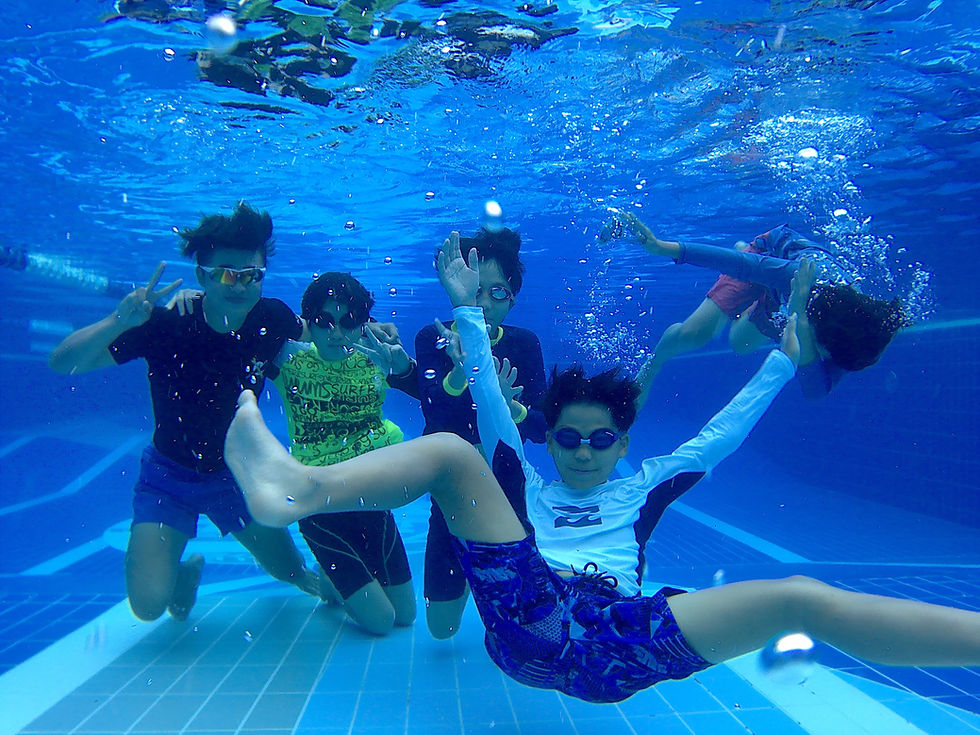
By Coach Tan Meng Chew (MC), SG Sink Or Swim
Almost every new student, or parent of a new student, asks me some version of the same question in the first conversation: "Which stroke do we start with?"
Some people assume freestyle, because it's the stroke they see most often on television and at the pool. Others have heard that breaststroke is easier because the head stays up. A few ask about backstroke, because "at least you can breathe." And some arrive with a firm opinion from a friend, a relative, or something they read online.
The honest answer is that there isn't one stroke that is right for everyone. But there is a sensible way to think about it, and in my experience, the best first stroke depends on the learner's age, comfort level, goals and body. In this article, I'll walk through each of the four main strokes, explain what makes each one easy or difficult for a beginner, and share how I decide where to start at SG Sink Or Swim.
First, a Small Reality Check: Strokes Aren't Where Everyone Starts
Before we choose a stroke, I want to point out something that surprises many people. For true beginners, strokes are not the very first thing we teach.
Before anyone learns a stroke, they need a foundation:
Water comfort. Being relaxed with water on the face and around the head.
Breath control. Blowing bubbles and breathing out under the water.
Floating. Letting the water support the body, on both front and back.
Gliding. Pushing off the wall and travelling forward in a streamlined position.
Basic kicking. Using the legs to move gently through the water.
Safe entries and exits. Getting in and out of the pool confidently.
These skills sit underneath every stroke. A child who can't blow bubbles will struggle with freestyle breathing. An adult who can't float will tire quickly in breaststroke. If you skip the foundation and rush to a stroke, you risk building habits that take months to undo.
So when people ask "which stroke first?", my first answer is usually, "after we've built comfort and basic skills." Once that foundation is in place, the stroke choice becomes much clearer.
The Four Main Strokes at a Glance
Here's a simple overview of the four competitive strokes taught in most programmes.
Stroke | Body position | Breathing | Beginner difficulty |
Freestyle (front crawl) | Face down, alternating arms | Side breathing, timed with the stroke | Moderate to challenging |
Backstroke | Face up, alternating arms | Natural, face is out of the water | Easier to start, harder to master |
Breaststroke | Face down, simultaneous arms and legs | Lifts head forward each cycle | Moderate, with tricky leg timing |
Butterfly | Face down, simultaneous arms, dolphin kick | Lifts head forward | Advanced |
Butterfly is almost never anyone's first stroke, so I'll focus mostly on the other three. Let's look at each one.
Freestyle (Front Crawl)
Freestyle is the stroke most people picture when they imagine swimming. It's also the fastest and most efficient of the four, and it forms the basis of most training and fitness swimming.
Why Freestyle Is a Strong First Stroke
It's efficient. Once learned well, it covers distance with relatively little effort.
It builds a streamlined position. Learning to stay flat and long in the water helps with every other stroke.
It's the foundation for fitness and competitive swimming. If you want to swim laps for exercise, freestyle is where you'll spend most of your time.
It teaches rhythmic breathing, which is a skill that transfers to other strokes.
It's used in many assessments and programmes, so it's useful to learn early.
Why Freestyle Can Be Hard for Beginners
Breathing is the biggest obstacle. In freestyle, the face is in the water and you must turn your head to the side to breathe at the right moment. Many beginners struggle with the timing, and either hold their breath or lift their head too high.
It requires coordination. Arms, legs, head and breathing all need to work together.
It can feel tiring quickly. Beginners often swim too hard, tense up and run out of energy.
The face-down position can be scary for people who aren't yet comfortable with water on their face.
Who Freestyle Suits First
Freestyle tends to work well as a first stroke for:
Children who are already comfortable putting their face in the water
Adults who want to swim for fitness
Learners with a sports background or good coordination
Anyone who has completed the basic foundation skills and is ready for the next step
A Gentle Way to Introduce It
I rarely teach full freestyle all at once. Instead, I break it down: first kicking with a board, then kicking while gliding face down, then adding one arm at a time, then practising side breathing separately, and finally bringing it all together. Taking it in pieces makes the stroke much less overwhelming.
Backstroke
Backstroke is swum on the back, with alternating arm movements and a flutter kick, similar to freestyle but upside down.
Why Backstroke Is a Strong First Stroke
The face stays out of the water. For learners who are nervous about getting their face wet or about breathing, this is a major advantage. You can breathe naturally, any time you like.
It encourages a relaxed floating position. Because you're on your back, it's closely linked to the back float, one of the most important safety skills.
It's good for water safety. Being able to travel on your back and rest in a back float is valuable if you ever get tired.
It builds confidence. Many fearful beginners relax faster on their back than on their front.
It's easy on the neck and shoulders for some learners who find lifting the head uncomfortable.
Why Backstroke Can Be Tricky
You can't see where you're going. Beginners can drift off course or bump into the lane rope or the wall. Learning to look at the ceiling, the sky or the backstroke flags helps.
Water can go up the nose. If the head position is wrong or the body is too flat, water may splash over the face. Learners who dislike that feeling may need time to adjust.
Sinking hips. If the hips drop, the legs drag and the stroke becomes tiring. Keeping the chest up and head still helps.
Arm timing. Alternating arms smoothly takes practice.
Who Backstroke Suits First
Backstroke is often a good starting stroke for:
Learners who are afraid of putting their face in the water
Adults who feel anxious or tense and need a calmer entry to swimming
Children who dislike breathing coordination at the start
Anyone who needs to build confidence before moving on to face-down strokes
In my experience, a fearful learner who masters the back float and a simple backstroke often becomes more willing to try freestyle afterwards, because they've learned that the water can hold them.
Breaststroke
Breaststroke is the stroke with simultaneous arm movements and a frog-like kick. The head typically lifts out of the water to breathe on each cycle.
Why Breaststroke Is a Strong First Stroke
The head stays up or comes up regularly. For many beginners, being able to see forward and breathe frequently feels safer.
It's slower and more relaxed. You can swim at a gentle pace without feeling rushed.
It's popular with adults and older learners, many of whom find it a comfortable, sustainable stroke.
The kick is powerful and useful. The whip kick is also used for treading water, which is a key safety skill.
It's widely used for recreational swimming, including swimming with friends and family.
Why Breaststroke Can Be Tricky
The leg kick is technically difficult. Many beginners find the whip kick confusing. Common mistakes include kicking with the knees pointing down, or pushing with the tops of the feet instead of the insides.
Timing the arms and legs is hard. The sequence is pull, breathe, kick, glide. Getting it out of order makes the stroke inefficient.
Lifting the head too high makes the hips sink and tires the swimmer.
It can strain the knees if done poorly or forced, so technique matters, especially for adults.
Who Breaststroke Suits First
Breaststroke often works well as a first stroke for:
Adults and older learners who prefer a slower, upright style
Learners who want to be able to see where they are going
Those who feel uneasy with the side breathing of freestyle
People who want to build water confidence for recreational swimming
That said, I don't usually recommend that a young child start with breaststroke, because the leg kick is hard to learn early on, and many children develop better coordination through flutter kick strokes first.
Butterfly
Butterfly is the most physically demanding stroke, involving a simultaneous arm recovery over the water and a dolphin kick. It requires strength, flexibility, rhythm and good timing.
I don't recommend butterfly as a first stroke for almost anyone. It's usually introduced much later, after the learner has developed confidence, strength and good basic technique. Some swimmers never learn it, and that is perfectly fine unless they want to compete.
So, Which Stroke First? Here's How I Decide
At SG Sink Or Swim, I don't have a rigid rule such as "everyone learns freestyle first" or "everyone starts with backstroke." Instead, I look at a few key factors.
1. The learner's comfort with water
If someone is very nervous about face-in-the-water, I usually start with backstroke and back floating, because they allow breathing without the added challenge of timing. If someone is already comfortable with bubbles and face immersion, freestyle is a natural next step.
2. Age
Toddlers and preschoolers: Strokes aren't the main focus. We emphasise comfort, floating, kicking and simple movement. When strokes begin, children often learn a simple kick-based motion first, and later move into freestyle and backstroke patterns.
School-age children: Many do well with freestyle and backstroke first, because these use alternating movements and flutter kick, which are easier for most children to coordinate than the breaststroke kick.
Teenagers: They can usually handle any stroke, so we choose based on goals and comfort.
Adults: The choice depends heavily on fear, flexibility and purpose. Adults who feel anxious may start with backstroke or breaststroke, while fitness-minded adults often aim for freestyle.
3. Goals
What does the learner want to do with swimming?
Safety and survival skills: Back floating, treading water and a stroke that lets them rest and travel are priorities. Backstroke and breaststroke often come into play early.
Fitness: Freestyle is the most efficient for sustained lap swimming.
A programme or assessment: If the learner is working through a structured programme, the stroke order may follow the syllabus. I always check what's required.
Recreation: If the goal is simply to enjoy pools, beaches or holidays, a comfortable, easy stroke like breaststroke may be ideal.
Competition: Eventually, all four strokes will matter, but freestyle and backstroke usually come first.
4. Body type and physical comfort
Flexibility, joint comfort and body composition all affect what feels natural. For instance, someone with stiff ankles may find the breaststroke kick painful at first, while someone with tight shoulders may find freestyle arm movements awkward. I adjust accordingly.
5. Personality
Some learners like structure and technical detail, while others prefer to feel the water and move. Some are confident and want to challenge themselves, and others need a gentler pace. Matching the stroke to the person helps keep them motivated.
The Common Learning Order, and Why It Often Works
Although there are exceptions, many programmes follow a rough pattern like this:
Foundation skills: comfort, bubbles, floats, glides, basic kick
Backstroke and freestyle basics: often introduced together or in close sequence, because they share a flutter kick and alternating arm pattern
Breaststroke: introduced once the learner has some stability, because the leg kick takes time
Butterfly: introduced last, when strength and coordination are developed
This order works well because it builds skills gradually. Flutter kick and alternating arms are easier to learn first. Then the learner is ready for the more technical breaststroke kick, and finally the demanding butterfly.
But it isn't compulsory. An adult who is nervous may spend more time on backstroke before trying freestyle. A learner who loves breaststroke may focus on it earlier. Good teaching is flexible.
Common Myths About Choosing a First Stroke
Let me address a few myths I hear often.
Myth 1: "Breaststroke is the easiest stroke, so everyone should start there."Breaststroke feels easy because the head is up, but the kick and timing are often the hardest part for beginners. It's easy to survive in, but not always easy to learn well.
Myth 2: "Freestyle is the only 'real' stroke."Freestyle is wonderful, but it's not the only valid stroke. Many swimmers enjoy and use other strokes for life.
Myth 3: "If you learn a stroke wrongly at first, it doesn't matter. You'll fix it later."Bad habits form quickly and can be hard to correct. It's much better to learn good technique from the start, even if it means progressing more slowly.
Myth 4: "Children should learn all four strokes quickly."Children develop at their own pace. Rushing through strokes without solid technique rarely helps. Quality matters more than speed.
Myth 5: "Adults should avoid the deep end until they've learned every stroke."Safety skills like floating and treading water matter more than stroke variety, and these can be learned alongside strokes.
Myth 6: "If I can't breathe properly in freestyle, I'm a bad swimmer."Side breathing is one of the hardest skills in swimming. Almost everyone struggles with it at first. It's a sign you're learning, not failing.
The Role of Kicking in Choosing a Stroke
One thing people overlook is how important the kick is in deciding the first stroke.
Flutter kick is used in freestyle and backstroke. It's a continuous up-and-down movement, usually easier for beginners and children.
Whip kick is used in breaststroke. It's more complex and often needs more flexibility.
Dolphin kick is used in butterfly. It needs core strength and body undulation.
Because flutter kick is simpler, strokes that use it tend to be easier to start with. But some adults find the flutter kick tiring, and prefer the more powerful, rhythmic whip kick. Again, it's an individual choice.
What About Safety?
Since swimming is a life skill, I always keep safety in mind when choosing what to teach early.
Back floating, treading water and being able to move to the wall are the most important safety skills for any beginner. Backstroke and breaststroke both support this well. Backstroke leads naturally into resting on the back, and breaststroke's kick supports treading water.
That doesn't mean we skip freestyle. It simply means we don't treat strokes as the only goal. A learner who can swim a pretty freestyle but can't float or rest in deep water is not as safe as one who has solid fundamentals, even if their stroke looks less polished.
How Long Does It Take to Learn a First Stroke?
This varies widely. A few general observations from my coaching:
Children often need several weeks to months to build comfort and then learn the basic pattern of a first stroke, depending on age and frequency of lessons.
Adults may need a similar or longer period, especially if fear is involved.
Regular lessons make a big difference. Weekly or twice-weekly lessons help learners retain what they've learned.
Practice between lessons helps, even short sessions.
It's best not to chase a deadline. A strong first stroke built carefully will support all your future swimming.
Tips for Parents: Choosing and Supporting a First Stroke for Your Child
If you're a parent, here are a few suggestions.
Trust the coach's progression. A good coach has reasons for the order they teach things.
Don't compare your child with others. Some children learn freestyle quickly, others take longer, and that's normal.
Ask what your child is working on and why. A good coach will explain.
Celebrate small wins. A longer glide, a calmer breath or a smoother kick is progress.
Avoid pressuring your child to do a stroke they're not ready for. Pressure can create fear.
Keep it fun. Children who enjoy the water learn faster.
Tips for Adults: Choosing and Supporting Your Own Learning
If you're an adult learner:
Be honest about your fears and goals. Tell your coach what worries you and what you want from swimming.
Don't feel embarrassed about the stroke you start with. Starting on your back or with a simple breaststroke is perfectly fine.
Be patient with breathing. It's the hardest part for most adults.
Practise safely. Stay in areas where you can reach the wall, and avoid swimming alone.
Think about your long-term goals. If you want fitness, you'll likely move toward freestyle. If you want relaxation and safety, you may be happy with a different mix.
Check with your doctor if you have any health concerns before starting a new exercise.
How SG Sink Or Swim Approaches the First Stroke
At SG Sink Or Swim, I try to avoid the one-size-fits-all approach. When a new learner joins, I begin by understanding who they are: their age, experience, fears, goals and what they hope to get from lessons. Then I choose a starting point that suits them.
For a fearful beginner, that might mean spending more time on floating and backstroke before moving to face-down swimming. For a confident child, it might mean moving quickly into kick and freestyle. For an adult who simply wants to swim comfortably and safely, it might mean building a relaxed breaststroke alongside safety skills.
I also believe in teaching strokes in small, manageable pieces. Whole-stroke swimming can feel overwhelming, so I break it into skills such as body position, kick, arm movement, breathing and timing. This keeps lessons clear and encouraging, and learners can see their own progress.
Above all, I want learners to feel safe and capable. A first stroke isn't just a technical achievement. It's often the first moment someone realises, "I can actually do this."
Frequently Asked Questions
Is freestyle the best first stroke?
It's a great choice for many learners, especially those who are comfortable with their face in the water and want to swim for fitness. But it isn't automatically best for everyone.
Should my child learn backstroke or freestyle first?
Either can work. Children who are hesitant about water on the face may do better starting with backstroke. Confident children may move quickly into freestyle. Often both are taught in close sequence.
Is breaststroke easier for adults?
Many adults find breaststroke comfortable because the head stays up, but the kick takes time to learn. It suits some adults beautifully and frustrates others.
Can I learn only one stroke?
Yes. Many people swim comfortably and safely with just one or two strokes. If you want more, you can always add them later.
When should butterfly be introduced?
Usually much later, after the learner has strong basics, good fitness and confident technique. It isn't necessary for most recreational swimmers.
Do I need to learn all four strokes?
Not unless you want to compete or you're in a programme that requires it. For safety, fitness and enjoyment, being comfortable in one or two strokes is a good start.
Which stroke is best for safety?
No single stroke is best. Back floating, treading water and having at least one comfortable stroke to reach safety are what matter most.
What if I'm struggling with one stroke?
That's normal. Tell your coach. Sometimes switching focus for a while, or breaking the stroke into smaller pieces, makes a big difference.
Final Thoughts
So, which stroke should you learn first?
The best answer is: the one that fits you right now, after you've built a solid foundation of comfort, floating, breathing and kicking. For some people, that's backstroke, because it keeps the face out of the water and builds confidence. For others, it's freestyle, because they want fitness and efficiency. And for many adults, it's breaststroke, because it feels calm and upright.
To recap the main points:
Strokes come after foundation skills like water comfort, bubbles, floating and gliding.
Freestyle is efficient and great for fitness, but breathing can be challenging.
Backstroke keeps the face out of the water and suits nervous learners well.
Breaststroke feels relaxed but has a tricky kick and timing.
Butterfly is advanced and rarely a first stroke.
Age, comfort, goals, body type and personality all affect the best starting point.
Safety skills such as floating and treading water matter as much as stroke choice.
A good coach will adapt the order to the learner, not the other way around.
If you're unsure where to begin, I'd encourage you to talk with a coach, explain your goals and concerns honestly, and let them help you choose a path. The first stroke you learn isn't a final decision. It's simply the first step on a journey that can last a lifetime.
At SG Sink Or Swim, I'd be happy to help you or your child find the right starting point and build confidence in the water, one stroke at a time.
Coach Tan Meng Chew (MC) is the coach behind SG Sink Or Swim, helping children and adults in Singapore learn to swim with confidence and safety.

Comments