

How to Become a Swimming Coach in Singapore

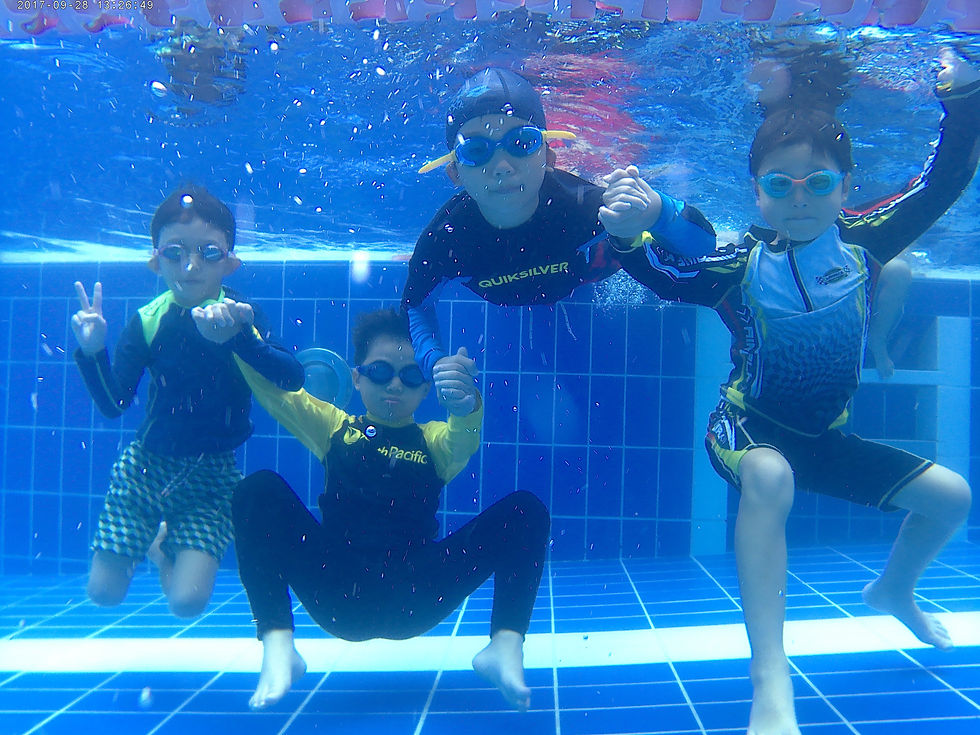
Singapore's love affair with the water runs deep. Between the SwimSafer programme that puts nearly every Singaporean child through structured water-safety training, the country's world-class competitive swimming pedigree, and a growing population of adults learning to swim later in life, demand for qualified swimming coaches and instructors has stayed consistently strong for years. It's also one of the more accessible coaching careers to break into — you don't need a university degree, and many coaches start part-time while holding down another job or studying.
But "just be a good swimmer" isn't enough. Singapore has a fairly structured, government-backed pathway for anyone who wants to teach swimming professionally, whether that's helping toddlers blow bubbles for the first time or training competitive squad swimmers. This guide walks through exactly what that pathway looks like in 2026: the certifications you need, the organisations involved, how much it costs, how long it takes, and what your career and earning potential look like once you're qualified.
Why Singapore Regulates Swimming Coaching So Closely
Unlike some countries where anyone with strong swimming ability can hang out a shingle and start teaching, Singapore has built a fairly tight regulatory structure around aquatic coaching. There are good reasons for this. Drowning remains one of the leading causes of accidental death among children globally, and Singapore's compulsory SwimSafer programme — which puts students through structured water-safety training — depends on having a reliable pool of properly trained, safety-certified instructors.
The result is that most reputable employers (public ActiveSG pools, MOE schools, condominium management, established swim schools) will only hire or engage coaches who are registered with the National Registry of Coaches (NROC), a system run by Sport Singapore through its coach-development arm, CoachSG. If you want to coach informally for family and friends, you technically have more leeway, but if you want to build an actual career — get hired by a swim school, coach at a public pool, or run your own registered lessons at condos and country clubs — NROC registration (or, at minimum, a recognised entry-level teaching certificate) is the practical starting point.
Step 1: Understand the Two Main Career Tracks
Before diving into certifications, it helps to decide roughly which direction you're heading, because the pathway branches slightly depending on your goal.
Learn-to-swim instructor. This is the most common entry point. You'll be teaching water confidence, stroke fundamentals, and safety skills to children and adults who are learning to swim from scratch or improving basic technique. This is the role most private swim schools, condo instructors, and SwimSafer-affiliated coaches occupy.
Competitive/squad coach. This track is for those who want to coach swimmers who are already proficient and are training for competition — club squads, school teams, or elite-track athletes. It generally requires stronger technical swimming knowledge, a deeper understanding of periodisation and training load, and often builds on top of the learn-to-swim certifications rather than replacing them.
Most people start on the learn-to-swim track, build experience, and then move into squad coaching later if that's where their interest lies. This guide focuses primarily on that more common starting path, while flagging where the competitive route diverges.
Step 2: Meet the Baseline Eligibility Requirements
Before you sign up for any course, there are a few baseline requirements set by the relevant governing bodies — chiefly Singapore Aquatics (SAQ), formerly known as the Singapore Swimming Association, and CoachSG/Sport Singapore for NROC registration.
Age: You generally need to be at least 18 years old (as of 1 January of the intake year) to register as an NROC coach. Some entry-level instructor courses accept slightly younger candidates, but full coaching registration requires adulthood.
Swimming proficiency: You don't need to have been a competitive swimmer, but you do need to be proficient and confident across the four competitive strokes — freestyle, backstroke, breaststroke, and butterfly — since you'll be expected to demonstrate and correct technique.
Lifesaving award: Most pathways require a recognised lifesaving qualification, typically the Bronze Medallion from the Singapore Life Saving Society or an equivalent Lifesaving 1/2/3 award, before you can proceed to instructor-level courses.
Work eligibility: Singaporeans and PRs can proceed directly. Foreign applicants need a valid Work Pass or a Letter of Consent from the Ministry of Manpower confirming they're authorised to coach in Singapore.
If you're missing the lifesaving qualification, that's usually your first stop — most training providers offer it as a standalone short course, and several instructor certification packages bundle it in.
Step 3: Get Standard First Aid and CPR/AED Certification
This is non-negotiable and required by virtually every employer, from private condo management to public pool operators. You'll need a Standard First Aid certificate that includes CPR and AED training, accredited by the Singapore Resuscitation and First Aid Council (SRFAC) or an equivalent recognised body.
A few things to keep in mind:
Make sure the course you sign up for specifically includes AED (Automated External Defibrillator) training — some basic first aid courses don't, and you'll need to redo it if the certificate doesn't cover this.
The certificate typically costs somewhere in the $150–$200 range and is valid for two years, after which you'll need to recertify.
Many swim-instructor certification packages bundle this in alongside the lifesaving award, which can save you time and a bit of money if you're starting from zero.
Because this certificate expires every two years, budget for recertification as an ongoing cost of staying employable — pool operators and swim schools will check that it's current before letting you teach.
Step 4: Choose Your Instructor Certification Pathway
This is the heart of the process, and there are a few different routes depending on your goals, budget, and timeline. Broadly, aspiring instructors in Singapore choose between the local SG-Coach Programme pathway (which feeds directly into NROC registration) and international certification bodies like AUSTSWIM or Swim Schools International (SSI), which are widely recognised by private swim schools even outside the NROC system.
Option A: The SG-Coach Programme (via Singapore Aquatics / CoachSG)
The SG-Coach Programme — the successor to the older National Coaching Accreditation Programme (NCAP) — is the official, government-recognised route into swim coaching, and it's the pathway that leads most directly to full NROC registration. It's run jointly by Singapore Aquatics and CoachSG, and is designed to prepare not just competent technical instructors, but coaches who understand the "why" behind coaching methodology, including values education and coaching philosophy appropriate to Singapore's youth sport ecosystem.
The programme is structured in two main components:
SG-Coach Level 1 (Theory), which includes the Values & Principles in Sport (VPS) module — covering coaching philosophy, appropriate coach behaviour, the Ministry of Education's Game-For-Life framework, and Singapore's 21st Century Competencies framework for youth development. This can also be satisfied by an equivalent NCAP theory certificate if you already hold one.
SG-Coach Level 1 (Technical) for Swimming, delivered through a blended-learning approach combining online modules, classroom sessions, pool practicals, and Singapore Aquatics assessments. The course typically runs through around 10 online modules and 8 classroom modules, followed by a practicum attachment of roughly 24 sessions where you coach under supervision before being signed off.
To enrol in the technical course, you'll generally need to be at least 18 and already hold a lifesaving certificate. Course fees can be significantly offset using SkillsFuture Credits, since the programme is listed under Singapore's national SkillsFuture course directory — worth checking before you pay out of pocket.
Once you've completed both the theory and technical components, plus hold Standard First Aid (with AED) certification, you're eligible to apply for NROC registration through CoachSG.
Option B: AUSTSWIM
AUSTSWIM is Australia's national organisation for teaching swimming and water safety, and it has built a strong reputation and wide acceptance in Singapore, including recognition by many SwimSafer-affiliated providers and private swim schools. It's often considered the most common entry point for people who want a faster, more streamlined route into teaching, particularly if they're not initially chasing full NROC registration.
Typical course structure:
Duration: 2 to 3 days of combined classroom and pool practical training, plus supervised teaching practicum hours completed afterwards
Cost: Approximately $400 to $600, depending on the provider
Validity: 3 years, renewable through continuing professional development (CPD) points and reaccreditation
Content: Stroke development, lesson planning, water safety pedagogy, and behaviour management, particularly for children
AUSTSWIM certification is well suited to people aiming for entry-level swim school work or building a freelance learn-to-swim practice, and it can also feed into NROC registration as an "equivalent" technical qualification, depending on current CoachSG recognition — it's worth confirming this directly with CoachSG or your training provider before enrolling, since recognition arrangements can be updated.
Option C: Swim Schools International (SSI) and Other Private Providers
Several private academies in Singapore run their own structured instructor courses, often branded under Swim Schools International (SSI) or similar frameworks, sometimes bundled with specialised modules like infant/toddler swim instruction, teaching adults with water phobia, or stroke-correction specialisation. These are generally positioned as fast, practical, employment-focused courses — useful if you want to get teaching quickly at a private swim school rather than working toward full NROC registration immediately.
These courses often bundle in the lifesaving award and first aid/CPR certification as part of a package, so check exactly what's included before enrolling elsewhere. They can be a good option if your immediate goal is private or freelance teaching (condo pools, one-to-one lessons) rather than public pool or MOE school work, since those settings often don't strictly require NROC membership — though check with the specific facility, as requirements vary and are trending toward requiring registration.
Choosing between them
If your goal is long-term, public-facing coaching — ActiveSG pools, MOE's Sports Education Programme, competitive club coaching — go straight for the SG-Coach Programme and full NROC registration. It takes longer and involves more structured assessment, but it's the credential employers in these settings actually check for.
If you want to start earning sooner through private lessons, condo teaching, or working at a private swim school, AUSTSWIM or an SSI-style course can get you into paid work faster, and you can always work toward NROC registration afterwards as your career develops — many coaches do exactly this, treating the international certification as a stepping stone.
Step 5: Register with the National Registry of Coaches (NROC)
The NROC was established in 2003 to raise the standard and professionalism of sports coaching in Singapore, and today lists thousands of coaches across dozens of sports, including swimming. Registering isn't just a formality — for years, up until 2024, there was a "provisional" route that let newer coaches practise while completing outstanding requirements. That provisional pathway has now largely been phased out, and the expectation for new applicants is to complete all required certifications before applying for full membership.
To apply for full NROC membership as a swimming coach, you'll typically need:
SG-Coach Level 1 (Theory), including the VPS module, or an equivalent NCAP theory certificate
SG-Coach Level 1 (Technical) for swimming, or an equivalent recognised technical certificate (this is where AUSTSWIM or similar may count, subject to CoachSG's current recognition policy)
Standard First Aid certification including AED, valid and current
Completed Coach's Declaration and Undertaking, confirming you agree to abide by NROC policies and the Coach's Code of Ethics
Supporting documents on playing/coaching experience where relevant
For foreign applicants: a valid Work Pass or Letter of Consent from the Ministry of Manpower
Registration and profile management runs through CoachSG's SportSync platform, where you can also manage your continuing education records once registered.
Staying registered: Continuing Coach Education (CCE)
NROC membership isn't a one-time achievement — it comes with an ongoing obligation to keep learning. Registered swimming coaches need to accumulate a minimum of 9 CCE hours over each 3-year NROC membership cycle (at least 3 hours per year), and as of July 2023, 75% of that CCE requirement must be swimming-specific, completed through TeachSAQ or CoachSAQ workshops and events run by Singapore Aquatics.
Some of this can be fulfilled through self-guided reflection activities logged via SportSync using your SingPass, capped at 3 hours across 3 reflections, with the remainder needing to come from actual workshops or CCE-recognised events. This system exists to make sure practising coaches stay current with evolving best practice in technique, safety, and pedagogy — not just to add administrative overhead.
Step 6: Get a Pool Usage Permit (Where Required)
If you plan to coach at public ActiveSG pools or similar facilities, you'll typically also need a Pool Usage Permit, which is a separate, relatively small administrative cost (in the ballpark of around $125) on top of your coaching certifications. This permit is what actually authorises you to conduct paid lessons in specific public pool venues, as distinct from simply being a certified and NROC-registered coach. Requirements and fees can vary by venue, so it's worth checking directly with the specific ActiveSG pool or facility you intend to work at.
Step 7: Get Practical Experience Before Going Solo
Certification gets you in the door, but real teaching skill — reading a nervous 5-year-old, managing a class of eight kids with different confidence levels, adjusting on the fly for an adult who's terrified of putting their face in the water — comes from time in the pool. Most new coaches don't start as head instructors running their own classes.
The typical progression looks like:
Assistant or shadow coach: Work alongside an experienced instructor, observing lesson structure, class management, and how they handle common issues like fear of water or plateauing swimmers.
Supervised teaching: Take on parts of a lesson under supervision — this is often built directly into certification courses as a practicum component (the SG-Coach pathway, for instance, includes a substantial supervised attachment).
Independent teaching under an employer: Run your own classes at a swim school, condo, or public pool, typically starting part-time.
Building a specialisation or client base: Over time, many coaches develop a niche — infant and toddler swimming, teaching adults with water phobia, competitive stroke correction, or squad coaching — which can command higher rates and build a loyal following, especially for those who go on to freelance.
Volunteering or interning with an established instructor early on is a genuinely useful shortcut here. It's low-risk for both sides and gives you a realistic sense of what day-to-day coaching actually involves before you commit fully.
What You'll Actually Be Doing as a Swimming Coach
It's worth being clear-eyed about the scope of the job, because it goes well beyond "teach the four strokes." Swimming coaches in Singapore are generally responsible for:
Safety supervision: managing risk in and around the pool, preventing accidents, and being prepared to respond immediately to emergencies — this is why the first aid and lifesaving requirements are taken so seriously
Technical instruction: teaching and correcting stroke mechanics across freestyle, backstroke, breaststroke, and butterfly
Water confidence building: for many students, especially young children and adults learning later in life, overcoming fear of water is the real first hurdle before technique even becomes relevant
Class and group management: running multi-student classes with a range of skill levels and attention spans, particularly with children
Lesson planning and progression tracking: structuring lessons that build logically toward SwimSafer stage completion or individual goals
Specialised populations: some coaches build expertise with specific groups — infants as young as 6 months old, adults with significant water phobia, or competitive squad swimmers with performance goals
Salary and Income Expectations
Earning potential varies quite a bit depending on whether you're employed by a swim school, working as a freelance/private instructor, or coaching within the public/school system, as well as your experience level and certifications.
Part-time or freelance instructors working through swim schools typically earn somewhere around $25 to $50 per hour, depending on experience, certifications held, and the specific school's rate structure. Private one-to-one lessons, particularly for specialised populations like infants or adults with water phobia, can often command rates at the higher end of this range or above.
Full-time coaches employed by a swim school or organisation can expect a monthly salary in the range of roughly $2,500 to over $4,500, often including CPF contributions and other employment benefits, with income growing as you build experience, certifications, and a loyal client base.
Coaches who progress into competitive/squad coaching, or who build a strong private client base with a specialisation, can earn meaningfully more than these baseline figures, though this typically takes years of building reputation and results.
Realistic Timeline and Costs
Putting the whole pathway together, here's roughly what a new coach starting from zero should expect:
Requirement | Approximate Cost | Approximate Duration |
Lifesaving award (Bronze Medallion or equivalent) | Often bundled, or a few hundred dollars standalone | A few days to a couple of weeks |
Standard First Aid + CPR/AED | $150 – $200 | 1–2 days |
AUSTSWIM or equivalent instructor certification | $400 – $600 | 2–3 days plus practicum |
SG-Coach Level 1 (Theory + Technical) | Varies; SkillsFuture-subsidised | Several weeks (online + classroom + ~24-session practicum) |
Pool Usage Permit (if working at public pools) | Approx. $125 | Administrative, quick |
All told, someone moving efficiently through the process — lifesaving award, first aid, and an entry-level instructor certification — can realistically be teaching paid lessons within a couple of months. Full NROC registration, given the more comprehensive SG-Coach pathway and practicum requirements, generally takes longer — realistically several months when done properly, factoring in course intake schedules and supervised teaching hours.
Qualities That Make a Genuinely Good Swimming Coach
Certifications get you qualified; they don't automatically make you good at the job. A few traits consistently separate coaches who build lasting careers and strong client relationships from those who don't:
Patience, especially with young children and adults overcoming genuine fear of water — progress is often slow and non-linear, and visible frustration from a coach can set a nervous student back significantly
Clear, simple communication, since a lot of teaching swimming is about breaking down movements into instructions a 5-year-old (or a terrified adult) can actually follow
Strong safety instincts and constant situational awareness, since pool environments carry real risk and a coach is often the first and only line of defence in an emergency
Adaptability, since no two students learn the same way, and a good coach adjusts their approach rather than repeating the same method that isn't working
Genuine enjoyment of teaching, not just swimming — being a strong swimmer yourself is necessary but nowhere near sufficient; the job is fundamentally about other people's learning, not your own performance
Final Thoughts
Becoming a swimming coach in Singapore is accessible compared to many professional paths — you don't need a degree, the certification costs are modest, and demand stays strong year-round thanks to school holidays, the SwimSafer programme, and a steady stream of adults deciding to finally learn to swim. But it is a structured process with real regulatory backing, built around genuine safety concerns, and that's a good thing: it means the credential actually means something to employers and parents alike.
The practical starting point for almost everyone is the same: get your lifesaving award, get Standard First Aid with CPR/AED certified, and then choose between the SG-Coach Programme (if you're aiming for full NROC registration and public/school-system work) or a faster international certification like AUSTSWIM (if you want to start teaching privately sooner). From there, it's a matter of building real teaching experience, staying current with your CCE requirements if you go the NROC route, and — over time — developing the specialisation or reputation that lets you set your own rates and build a career you actually enjoy.


Comments