

Reach, Stretch, Glide: How Swimming Builds Lifelong Flexibility in Children

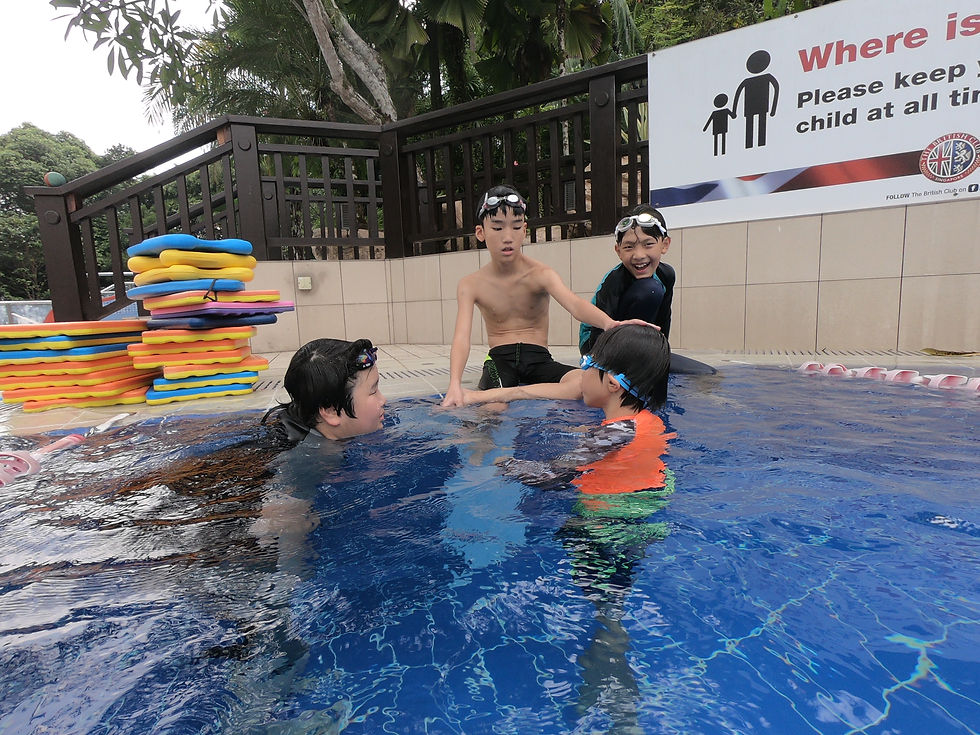
When we think of the benefits of youth sports, we usually focus on cardiovascular health, muscle strength, or teamwork. But there is a crucial, often-overlooked physical benefit that sets one sport apart from the rest: flexibility.
While many land-based sports—like soccer, basketball, or even gymnastics—can cause muscles to tighten and shorten due to repetitive, high-impact movements, swimming does the exact opposite. Swimming is essentially a continuous, dynamic stretching routine.
For growing children, whose bodies are constantly changing and whose modern lifestyles involve hours hunched over desks and screens, swimming is a powerful antidote to physical stiffness. Here is a comprehensive look at how swimming improves flexibility in children, stroke by stroke, and why it’s one of the best things you can do for their developing bodies.
The Science of the "Liquid Stretch"
To understand why swimming makes kids more flexible, we have to look at the unique physical properties of the water environment. Swimming improves flexibility through three distinct mechanisms:
1. Full Range of Motion (ROM)
On land, gravity constantly pulls down on our joints, limiting how far we can naturally extend our limbs. In the water, buoyancy supports the body’s weight. This unloads the joints and allows children to move their arms and legs through a much fuller, pain-free range of motion. They can reach further, stretch longer, and extend their joints without the compressive force of gravity holding them back.
2. Hydrostatic Pressure and Warmth
The physical pressure of the water (hydrostatic pressure) acts like a gentle, full-body compression sleeve, improving circulation and reducing joint swelling. Furthermore, most competitive and lesson pools are kept at a comfortably warm temperature (around 78°F to 82°F, or 26°C to 28°C). Warm muscles are pliable muscles. The combination of warmth and water pressure allows muscle fibers to lengthen more easily than they would in a cold, dry gym.
3. Dynamic vs. Static Stretching
Holding a static stretch (like touching your toes and holding it) is great for cool-downs, but dynamic stretching—moving through a range of motion repeatedly—is better for building functional flexibility. Every single stroke in swimming is a dynamic stretch. The muscles are actively lengthening and contracting under resistance, which builds usable flexibility, not just passive looseness.
Stroke by Stroke: How Swimming Targets Specific Areas
Each of the four competitive strokes targets different muscle groups, ensuring that a child who swims a mixed workout (like an Individual Medley) gets a comprehensive, full-body flexibility routine.
Freestyle and Backstroke: The Ultimate Posture Correctors
Target Areas: Shoulders, latissimus dorsi (lats), chest, and upper back.
The Flexibility Benefit: The modern child’s default posture is "hunched forward" (looking at tablets, phones, and desks). This tightens the chest and shortens the shoulder muscles. Freestyle and backstroke require the arms to reach far overhead and rotate backward. The recovery phase of freestyle and the continuous arm rotation of backstroke actively stretch the pectoral (chest) muscles and open up the shoulder joints, physically pulling the child’s posture back into alignment.
Breaststroke: The Hip and Groin Opener
Target Areas: Hip flexors, inner thighs (adductors), groin, knees, and ankles.
The Flexibility Benefit: The breaststroke whip kick is essentially a massive, dynamic stretch for the lower body. To execute the kick properly, a child must externally rotate their hips, bring their heels to their glutes, and then explosively open their legs. This constantly mobilizes the hip joint and stretches the often-tight inner thigh muscles. It also demands high ankle flexibility, as the feet must turn outward and point during the kick.
Butterfly: The Spine Mobilizer
Target Areas: The entire spine, core, chest, and shoulders.
The Flexibility Benefit: While usually taught to older children due to its high physical demand, the fundamental undulation of butterfly is incredible for spinal mobility. The wave-like motion requires the child to flex (round) and extend (arch) their spine repeatedly. This keeps the vertebrae mobile, stretches the abdominal muscles, and opens the chest cavity, promoting deep, expansive breathing.
Beyond the Pool: Real-World Benefits for Kids
The flexibility gained in the pool doesn't stay in the pool. It translates directly to a child’s daily life and their performance in other activities.
Injury Prevention in Other Sports: Tight muscles are brittle muscles; they snap and tear easily. A child who swims regularly has long, pliable muscle fibers. If they play soccer or run track, their swimming-induced flexibility acts as a buffer, drastically reducing their risk of hamstring pulls, groin strains, and shoulder injuries.
Navigating Growth Spurts: Children grow at alarming rates. Often, their bones grow faster than their muscles can stretch, leading to tightness, awkward coordination, and even pain (such as Osgood-Schlatter disease in the knees). Swimming gently pulls and lengthens the muscles, helping them accommodate the child's rapidly changing skeletal frame.
Better Balance and Coordination: Flexibility is deeply tied to proprioception (body awareness). A child who has a full range of motion in their joints has better balance and coordination, making them more agile on the playground and more confident in their physical abilities.
Tips for Parents and Coaches to Maximize Flexibility
Simply putting a child in the water won't automatically make them flexible if they are swimming with poor technique. To maximize the stretching benefits, keep these tips in mind:
1. Cue "Long and Smooth"
If a child is swimming with short, choppy strokes, they are missing out on the stretch. Coaches and parents should constantly cue them to "reach for the wall" and "push all the way to your thighs." Encourage them to extend their limbs fully at the end of every stroke.
2. Make Streamlines a Non-Negotiable
The push-off streamline is the single most beneficial flexibility exercise in swimming. When a child locks their hands, squeezes their ears, and points their toes, they are stretching their entire posterior chain (from their calves to their fingertips). Insist on tight, perfect streamlines for every single push-off.
3. Incorporate "Reach" Games for Beginners
For younger children who lack the attention span for technical cues, use games. Have them try to "touch the sky" during their arm recovery, or "kick the wall behind you" during flutter kicks. Gamifying the full range of motion ensures they stretch without realizing they are doing it.
4. Don't Skip the Deck Warm-Up
Flexibility starts before they get wet. A good 5-minute dynamic warm-up on the pool deck (arm circles, torso twists, leg swings) prepares the joints for the massive range of motion they are about to ask of them in the water.
Final Thoughts: A Gift of Lifelong Mobility
We often enroll our children in swimming to keep them safe around water or to get them to burn off energy. But by doing so, we are also giving them a profound physical gift.
In a world where kids are increasingly sedentary, hunched over screens, and specialized in single, repetitive sports, swimming offers a rare and beautiful balance. It builds a strong heart, yes, but it also builds a body that is long, limber, and free.
By stretching their muscles, opening their joints, and aligning their spines, swimming ensures that as your child grows taller, they also grow more capable. They aren't just learning how to swim; they are building a flexible, resilient foundation that will support them for the rest of their lives.


Comments