

Mastering the Distance: How to Train for Endurance Freestyle Events Using Interval Sets

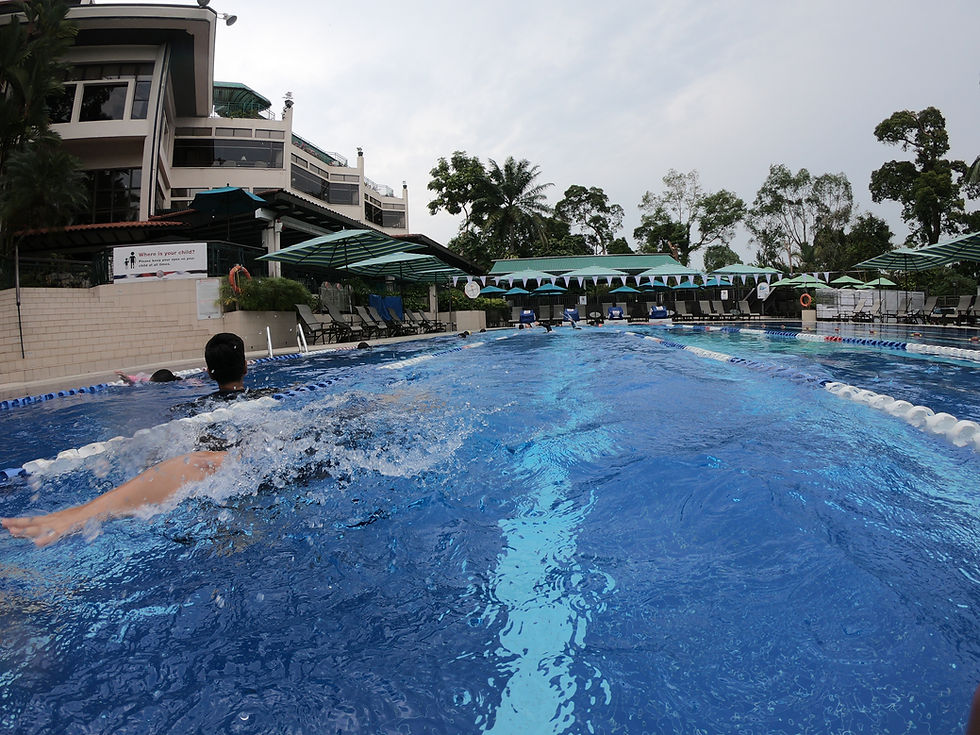
When swimmers decide to tackle endurance freestyle events—whether it’s the 800m, 1500m, or a grueling open-water mile—their instinct is almost always the same: I need to swim longer.
So, they jump in the pool and grind out endless, monotonous laps at a slow, plodding pace. While this builds a basic aerobic base, it does very little to make you faster. If you only ever swim slow, you will only ever be fast at being slow.
To truly excel in distance freestyle, you must train your body to hold a challenging pace while fatigued. The secret weapon for this is interval training. By breaking the total race distance into smaller, manageable chunks with specific rest periods, you can accumulate high volume at high quality without your technique collapsing at the 800-meter mark.
Here is your comprehensive guide to designing and executing interval sets that will transform your endurance freestyle.
The Science: Why Intervals Beat "Just Swimming"
Continuous, unbroken swimming (like a 1500m straight swim) is great for mental toughness, but it has physiological limits. By the time you reach the final 500 meters, your core temperature is high, your muscles are flooded with metabolic byproducts, and your stroke rate is dropping. You are practicing how to swim tired, but you aren't practicing how to swim fast while tired.
Interval training solves this by allowing you to:
Accumulate Volume: Swim the total race distance (or more) without the technique breakdown that occurs in continuous swims.
Target Specific Energy Systems: Manipulate the distance and the rest to specifically target your aerobic capacity or your lactate threshold.
Practice Pacing: Learn exactly what your goal race pace feels like, rep by rep, rather than guessing and blowing up halfway through a long swim.
The 3 Pillars of Endurance Interval Training
To build a bulletproof distance freestyle, your weekly training should rotate through three distinct types of interval sets.
1. Aerobic Capacity (Building the Engine)
The Goal: Expand your cardiovascular base and teach your body to process oxygen efficiently over long durations. The Structure: Longer repetitions (200m to 400m) with moderate rest (15–20 seconds per 100m). The Pace: "Comfortably hard." You should be breathing heavily, but your stroke should feel smooth and controlled. (RPE 6 or 7 out of 10).
Sample Workout: The 400m Builder
Warm-up: 400m easy choice.
Main Set: 5 x 400m Freestyle.
Interval: Leave on 5:30 (or take exactly 20 seconds rest after each 400m).
Pacing: Swim these as negative splits. The 5th rep should be faster than the 1st rep.
Focus: Keep your stroke count per length consistent. If your stroke count jumps by 3 or 4 strokes on the last rep, you are fighting the water, not swimming efficiently.
Cool-down: 200m easy backstroke.
2. Lactate Threshold (Raising the Redline)
The Goal: Increase your Critical Swim Speed (CSS). This trains your body to clear lactate from the muscles at the exact same rate it is being produced, allowing you to hold a faster pace for longer. The Structure: Medium repetitions (100m to 150m) with very short rest (5–10 seconds). The Pace: Threshold pace. This is the fastest pace you can hold while still maintaining perfect technique. It feels like an 8 out of 10.
Sample Workout: The 100m Clockwork
Warm-up: 300m freestyle, 200m kick, 100m pull.
Main Set: 16 x 100m Freestyle.
Interval: Leave on 1:30 (or take exactly 10 seconds rest).
Pacing: Your goal is to swim every single 100m in the exact same time. If your goal is 1:20, you must hit 1:20 on rep 1, and 1:20 on rep 16.
Focus: This is a pacing drill. If you swim the first three reps in 1:15, you will fail the set by rep 10. Discipline is everything here.
Cool-down: 300m easy choice.
3. "Broken" Swims (The Race Simulator)
The Goal: Simulate the exact psychological and physical demands of your target race distance, but with micro-rests to ensure you hit your exact goal race pace. The Structure: Breaking the race distance into larger chunks (e.g., breaking a 1500m into 3 x 500m, or 5 x 300m) with brief rests. The Pace: Exact goal race pace.
Sample Workout: The Broken 1500
Warm-up: 600m progressive freestyle (easy to fast).
Main Set: 5 x 300m Freestyle.
Interval: Take exactly 20 seconds rest between each 300m.
Pacing: Swim these at your exact goal 1500m race pace. (If your goal 1500m time is 20:00, your pace per 100m is 1:20. You must swim each 300m in 4:00).
Focus: Treat the 20-second rest like a turnaround buoy in open water. Use it to shake out your arms, take two deep breaths, and lock in your focus for the next block.
Cool-down: 400m easy, focusing on long, gliding strokes to flush the legs.
4 Golden Rules for Executing Interval Sets
Writing the set on the whiteboard is the easy part. Executing it properly is where the magic happens. Follow these rules to get the most out of your intervals.
1. Understand "Send-offs" vs. "Rest"
Many swimmers confuse these two concepts.
Rest: You touch the wall, look at the clock, and wait exactly 15 seconds before pushing off again. (Best for beginners to ensure they get the exact recovery they need).
Send-off (Interval): You leave the wall on a set time. If the interval is 1:30, and you swim the 100m in 1:20, you get 10 seconds of rest. If you swim it in 1:25, you only get 5 seconds of rest. If you swim it in 1:32, you are late and have to wait for the next interval. Send-offs force you to maintain your pace even as you get tired.
2. Protect Your Stroke Count
In endurance events, fatigue causes swimmers to "spin their wheels"—taking shorter, faster strokes that slip through the water. During your interval sets, count your strokes per length on every single rep. If your stroke count starts creeping up, it means your catch is slipping. Slow down, lengthen your stroke, and regain your "hold" on the water before speeding up again.
3. Breathe Bilaterally (Even When Tired)
When you are exhausted on rep 12 of a threshold set, your brain will beg you to only breathe to your comfortable side. Resist this. Breathing only to one side creates muscular imbalances, causes your hips to drop on one side, and creates a slight steering effect that wastes energy. Force yourself to breathe every 3 strokes, or at least switch your breathing pattern every 2 or 3 reps.
4. Use the "Gear Shift" Strategy
Don't just swim every interval at one monotonous speed. To build a versatile endurance engine, incorporate "gear shifts" into your reps. For example, in a 4 x 400m set, swim the first 100m at a smooth, easy pace (Gear 1), build to race pace for the middle 200m (Gear 2), and sprint the final 100m (Gear 3). This teaches your body to accelerate when the brain is screaming to slow down.
Final Thoughts: Quality Over Junk Yardage
There is an old swimming adage: "Junk yardage creates junk fitness." If you are swimming 5,000 meters a practice, but your technique is falling apart and your pace is sluggish, you are just practicing how to be a slow, tired swimmer.
Interval training allows you to cut the junk and keep the gold. By structuring your workouts into targeted, purposeful intervals, you ensure that every single meter you swim is building your aerobic engine, raising your lactate threshold, or sharpening your race pace.
Stop just swimming long, slow laps. Grab the pace clock, set your intervals, and start training like a true distance freestyler. The wall at the end of the race won't stand a chance.


Comments