

Single-Arm Drill: Isolating Butterfly Arm Technique

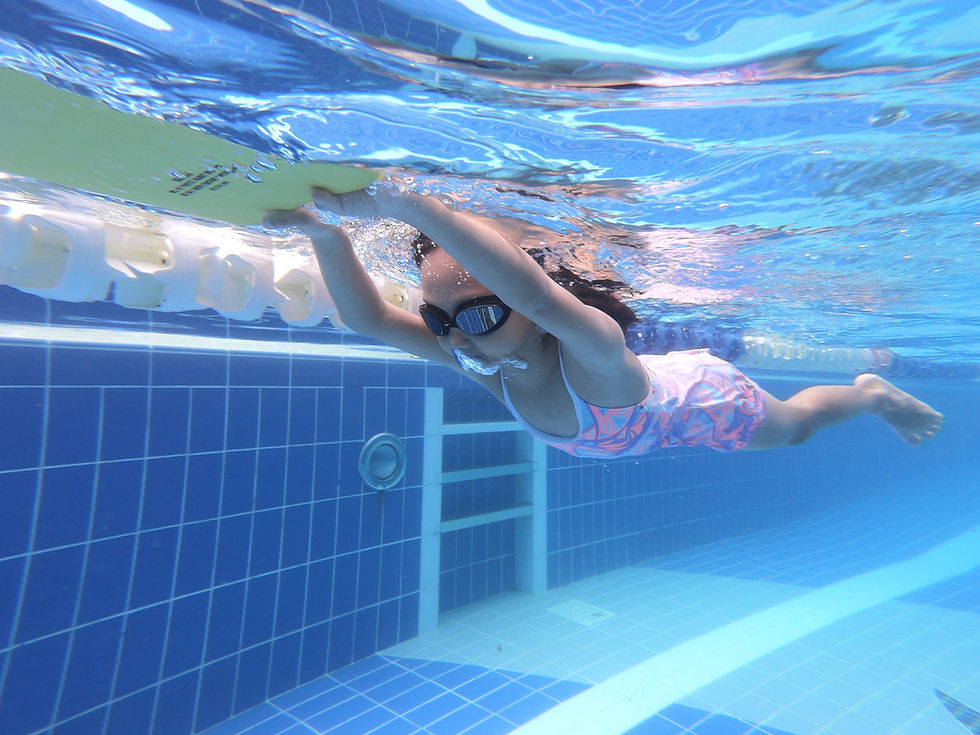
Unlock Precision, Power, and Rhythm — One Arm at a Time
Butterfly is often seen as a symphony of simultaneous motion — two arms pulling, two legs kicking, one explosive breath. But for swimmers struggling with timing, fatigue, or asymmetry, that very symmetry can mask technical flaws. Enter the Single-Arm Butterfly Drill — a transformative exercise that strips away complexity to reveal the true mechanics of the stroke.
By isolating one arm, you eliminate the “noise” of bilateral movement and focus purely on catch, pull path, recovery, and breath timing. The result? A deeper understanding of butterfly’s rhythm, balanced stroke mechanics, and a foundation for faster, more efficient full-stroke swimming.
In this guide, we’ll break down how to perform the Single-Arm Drill correctly, why it works so well, and how to integrate it into your training to fix common butterfly flaws.
🦋 Why Isolate the Arm in Butterfly?
In full butterfly, it’s easy to:
Compensate for a weak side with a stronger one
Rush the recovery to keep up with leg fatigue
Pull too wide or too deep without realizing it
Breathe at the wrong moment in the wave cycle
The Single-Arm Drill stops these habits by:
✅ Slowing the stroke to feel water pressure
✅ Revealing left/right imbalances
✅ Allowing full focus on arm mechanics
✅ Reducing physical demand — so you can repeat with perfect form
“If you can’t swim butterfly with one arm, you don’t truly own the stroke.”— Coach Bob Bowman
🛠️ How to Perform the Single-Arm Butterfly Drill
✅ Basic Setup:
Working arm: Performs full butterfly pull and recovery
Non-working arm: Extended in streamline (or at your side for beginners)
Kick: Full butterfly dolphin kick (2 kicks per arm cycle)
Breathing: Lift head only when the working arm recovers
Body: Maintain undulating wave from chest to toes
✅ The Perfect Stroke Sequence (One Arm):
Entry: Fingertips enter shoulder-width, thumbs first
Catch: Bend elbow early — press water inward and backward
Pull: “Keyhole” path — hands sweep to chest, not hips
Recovery: Arms throw forward over the water — relaxed, ballistic
Breath: Head lifts with the pull, submerges on recovery
🎯 Cue: “Pull deep. Recover fast. Breathe with the wave.”
📈 3 Progressions for All Levels
🔹 Beginner: Streamline Arm + Snorkel
Non-working arm in tight streamline
Use a front-mounted snorkel to remove breath stress
Focus: High-elbow catch, relaxed recovery
Sets: 4 x 25m per arm
💡 Why it works: Snorkel lets you focus purely on arm path and body wave.
🔹 Intermediate: Alternating Arms (25m Each)
Swim 25m right arm, 25m left arm
Breathe naturally on recovery
Focus: Symmetrical pull depth and recovery speed
Sets: 4–6 x 50m
🎯 Cue: “Is your left arm as strong as your right?”
🔹 Advanced: Race-Pace Single-Arm
No snorkel, full breath timing
Swim at 90–95% race effort
Focus: Fast recovery, powerful catch under fatigue
Sets: 6–8 x 25m per arm
💪 Pro Tip: Add a pull buoy to reduce leg fatigue if needed — but keep the dolphin kick active.
💪 5 Key Benefits of the Single-Arm Drill
Benefit | Why It Matters |
Reveals Asymmetry | Most swimmers have a “strong” and “weak” side — this drill exposes it |
Improves Catch Depth | Forces high-elbow, chest-level pull — not a wide or deep scull |
Refines Recovery | Teaches relaxed, ballistic arm throw — not a muscular lift |
Synchronizes Breath & Pull | Links inhalation to the natural rise of the chest |
Builds Stroke Confidence | Mastering one arm makes full stroke feel effortless |
🧠 Coaching Cues That Stick
🦋 “Pull like you’re climbing a rope — not pushing a wall.”
🖐️ “Your forearm is your paddle — your hand is just along for the ride.”
⚡ “Recover like you’re throwing lightning — fast and relaxed.”
🌊 “Breathe with your chest — not your neck.”
🧱 “Streamline the resting arm — don’t let it drag.”
⚠️ Common Mistakes — And How to Fix Them
Mistake | Why It’s Bad | Fix |
Dropping the non-working arm | Creates drag, breaks body line | Cue: “Keep streamline tight — squeeze ears” |
Kicking only once per cycle | Disrupts rhythm | Drill: Count “kick-kick” with every pull |
Lifting head too high | Sinks hips, breaks wave | Cue: “Eyes forward — not up” |
Pulling past shoulders | Creates downward force | Drill: “Stop when hands meet under chest” |
Rushing recovery | Causes shoulder strain | Cue: “Let momentum carry the arm — don’t muscle it” |
📅 Sample Single-Arm Butterfly Workout (45 Minutes)
Warm-Up:
400m easy choice + 4 x 50m drills (catch-up, side kick)
Technique Focus:
4 x 2 Cout m Single-Arm (snorkel) — right arm
4 x 25m Single-Arm (snorkel) — left arm
4 x 25m Alternating Arms (no snorkel)
Main Set:
4 x 50m Full Butterfly — apply single-arm insights
Focus: Symmetrical pull, fast recovery
Rest: 45s
Cool-Down:
200m easy backstroke + 5 min shoulder mobility (band pull-aparts, sleeper stretch)
💬 Real Results from Swimmers
“I always felt my left arm was weaker. After 2 weeks of single-arm drills, my full stroke felt balanced — and my 100 fly dropped 1.2 seconds.”— Age-Group Swimmer, 15
“The snorkel single-arm drill taught me to pull with my lats — not my shoulders. Now I don’t get sore after fly sets.”— Masters Swimmer, 38
Final Thoughts
Butterfly isn’t mastered in chaos — it’s refined in simplicity.The Single-Arm Drill doesn’t just improve your stroke — it rewires your understanding of what butterfly truly is: not a flailing motion, but a controlled, powerful, and rhythmic wave.
So next time you hit the pool, don’t just swim butterfly.Isolate it. Feel it. Own it.
Because the fastest butterfly isn’t the one with the strongest arms —it’s the one with the smartest stroke.
Pull deep. Recover fast. Breathe smooth.
In butterfly, mastery begins with one arm — and flows through the whole body. 🦋💙


Comments